

Much of the scrap in aluminium casting can be prevented by understanding what causes defects and controlling a few simple factors. This article reviews the most common defects and how to avoid them.
1. Gas porosity
Round, smooth-walled pores, caused mostly by hydrogen dissolved in the melt. Molten aluminium picks up hydrogen from moisture in the air, on tools and in the charge, and releases it as it solidifies. Prevention: melt degassing, dry tools and charge materials, and avoiding excessive melt temperatures.
2. Shrinkage porosity
Irregular cavities in thick sections of the part, which are the last to solidify. Prevention: correct gating and feeding design, more uniform wall thickness, and an alloy with a suitable freezing range.
3. Cold shuts and misruns
These occur when two metal fronts do not fuse properly or the die does not fill completely. Prevention: the right melt and die temperatures, sufficient injection speed, and a more fluid alloy (such as high-silicon alloys).
4. Hot tearing
Cracks that form at the end of solidification because of shrinkage stresses. Alloys with a long freezing range are more sensitive. Prevention: grain refinement with titanium–boron, better corner design, and a more resistant alloy.
5. Inclusions and oxides
Oxide particles and non-metallic impurities that reduce strength and surface quality. Prevention: clean ingot, fluxing, careful skimming, ceramic filters and avoiding turbulence in the melt.
How the ingot helps
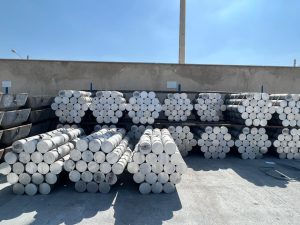
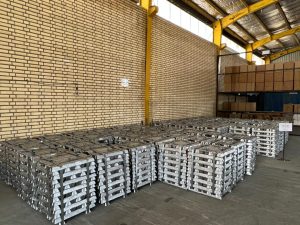
Uniform chemistry, low hydrogen and inclusion levels and a clean surface make the ingot the starting point of a sound casting. Almas alloy ingots are produced after a laboratory check of every melt.