



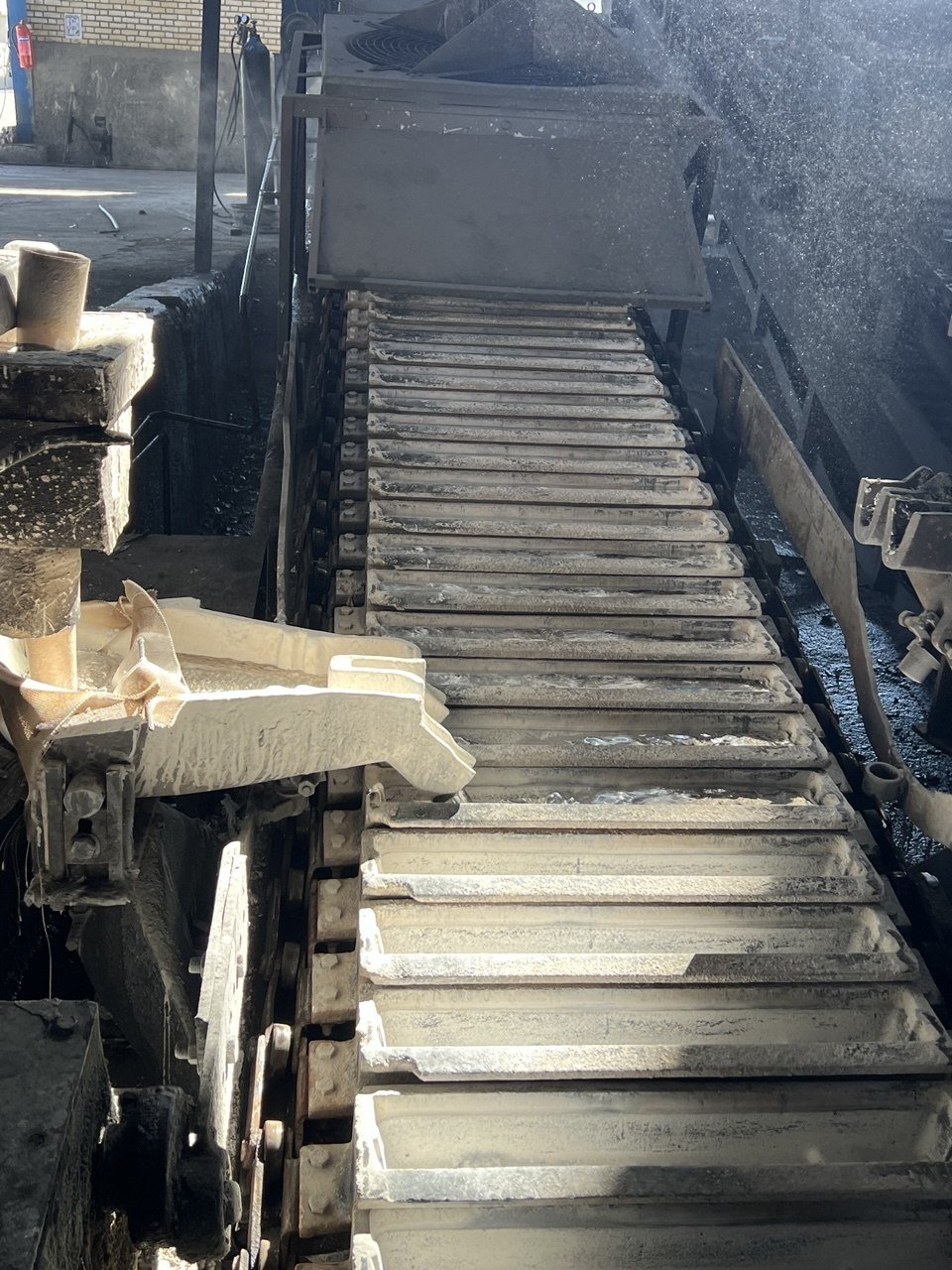
A study by the Université du Québec à Chicoutimi in Canada, supported by the General Motors Powertrain Group, examined how four everyday foundry variables (cooling rate, manganese content, strontium addition and solution heat treatment) shape the microstructure of Al–11Si–2.5Cu–Mg alloys. It is a useful reference on controlling the microstructure of Al-Si-Cu alloys, and it shows that one fixed chemical composition can produce very different microstructures depending on how it solidifies.
The alloy studied
Al–11Si–2.5Cu–Mg is a near-eutectic alloy of the aluminium–silicon–copper family used in automotive parts. The researchers compared two manganese levels (0.45% and 0.65%) and three strontium levels (none, about 0.02% and 0.035%) at two cooling rates: air cooling (dendrite arm spacing about 40 µm) and slow furnace cooling (about 120 µm). Solution treatment was 8 hours at 490 °C, chosen to avoid incipient melting of the copper-rich phase.
Key findings
- Slow cooling gives fewer intermetallics: the volume fraction of intermetallic phases was much lower in the furnace-cooled samples, because β-AlFeSi and Al2Cu dissolved at critical temperatures during slow cooling.
- β platelets only at fast cooling: β-AlFeSi platelets appeared in the as-cast air-cooled samples at both manganese levels but not in the furnace-cooled ones.
- Sludge depends on cooling rate too: sludge particles were seen in almost all air-cooled alloys with sludge factors of 1.4–1.9, but not in furnace-cooled alloys with similar sludge factors.
- Strontium increased the volume fraction of Al2Cu in the as-cast state and changed how the silicon particles responded to heat treatment.
- Solution treatment coarsened the silicon particles in unmodified alloys; in strontium-modified alloys the particles became more spherical. High manganese encouraged coarsening and resisted spheroidisation, while low manganese did the opposite.
Why these results matter
The study shows that the sludge factor alone does not tell the whole story: the cooling rate of the casting also decides how much iron-bearing phase forms and in what shape. In practice, thick and thin sections of one part can have different microstructures, and designers should allow for this. The interaction between manganese and strontium is also a reminder that additions cannot be tuned in isolation. See our articles on heat treatment and temper codes and the aluminium alloy series.
Reading the results as a buyer
For a buyer of alloy ingot, the lesson is that a certificate of analysis is necessary but not sufficient. The same iron and manganese figures can behave differently in a thin, fast-cooling casting and a thick, slow-cooling one. Sharing the casting process and section thicknesses with the ingot supplier helps choose the right iron and manganese window for the part.
Practical tips for foundries
- In castings that cool quickly, control iron and manganese more conservatively to limit β phase and sludge.
- If you modify silicon with strontium, allow for its effect on the copper phase and on heat-treatment response.
- The solution temperature of copper-bearing alloys must stay below the incipient melting point of Al2Cu.
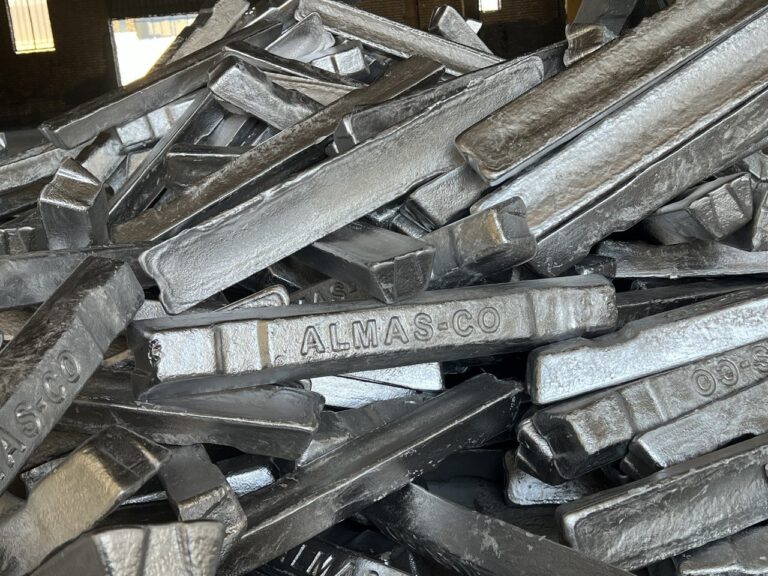
Almas Aluminium alloy ingot is produced with controlled composition, so the starting point for these adjustments is reliable. See our products.
Frequently asked questions
Why does dendrite arm spacing (DAS) matter?
DAS measures how fine the microstructure is and depends directly on the cooling rate. A smaller DAS usually means finer phases and better mechanical properties.
What does strontium do?
Strontium changes eutectic silicon from coarse plates to fine fibres, improving ductility; this is called modification.
Source
Z. Ma, E. Samuel, A.M.A. Mohamed, A.M. Samuel, F.H. Samuel, H.W. Doty, "Parameters controlling the microstructure of Al–11Si–2.5Cu–Mg alloys", Materials and Design, 31 (2010) 902–912. DOI: 10.1016/j.matdes.2009.07.033. Read the original paper
This article is the Almas Aluminium editorial team's summary of a published research paper. For the full experiments, tables and figures, please refer to the original paper.