

Aluminium–silicon–copper alloys such as A380 are the most widely used high-pressure die-casting alloys. Their iron content is deliberately kept somewhat high so that the melt does not stick to the steel die, but that same iron can form brittle compounds. A joint study by the University of Bologna in Italy and Jönköping University in Sweden showed that sludge particles reduce the fatigue strength of A380 alloy at room temperature by up to 22%.
Why fatigue matters
Many automotive and machine parts work under repeated loads, such as brackets, housings and engine parts. They can fail below their tensile strength because small cracks grow a little with every load cycle. Any brittle particle or pore in the microstructure can be the starting point of such a crack, so the internal quality of the alloy decides the life of the part.
How the study was done
The researchers made four A380-based alloys with different iron, manganese and chromium contents, so that the sludge factor (SF) rose from the base alloy up to about 3.7. To isolate the effect of sludge, the samples were remelted by directional solidification with a fixed dendrite arm spacing (about 10 µm) and then hot isostatically pressed (HIP) to remove porosity. Rotating bending fatigue tests were run at room temperature (T6 temper) and at 200 °C after overageing.
Main findings
- The sludge factor is a good indicator: the higher the SF, the larger the area covered by coarse sludge particles. Alloys with SF of about 1.8, 2.8 and 3.7 showed segregated structures, with heavy sludge particles settled towards the bottom of the samples.
- A high Fe:Mn ratio creates needles: the largest amount of β-Al5FeSi was found in the alloy with the highest Fe:Mn ratio.
- A 22% drop in fatigue strength: at room temperature in the T6 temper, fatigue strength fell by 22% from the base alloy to the alloy with the highest SF. In the sludge-rich alloys, cracks mostly started at the sludge particles themselves.
- Less effect at high temperature: at 200 °C all alloys were weaker because precipitates coarsened and the matrix softened, but the effect of SF was smaller, as a softer matrix reduces the stress concentration around the particles.
What it means for designers and foundries
The message is clear: for parts under repeated loads at normal temperatures, controlling iron, manganese and chromium together matters as much as eliminating porosity. Manganese is useful for correcting the shape of the iron phase, but if the SF climbs too high, manganese and chromium themselves help form sludge. Read more about the die-casting process and the similar ADC12 alloy.
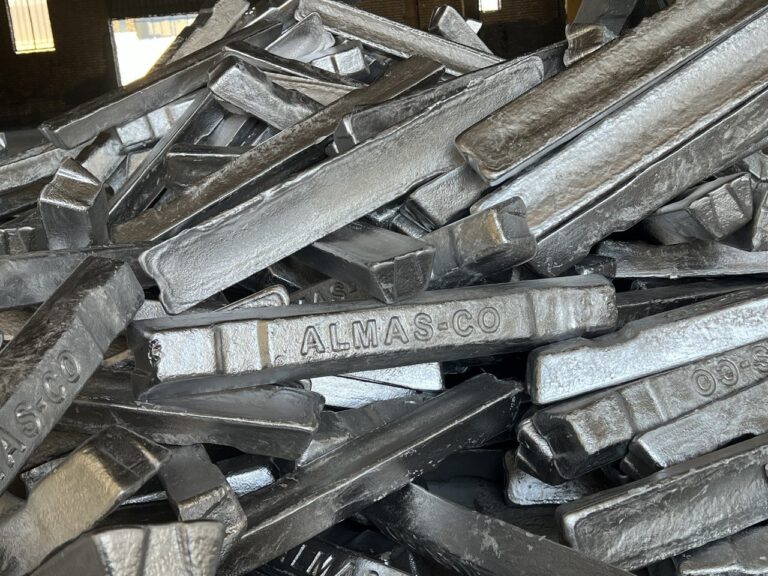
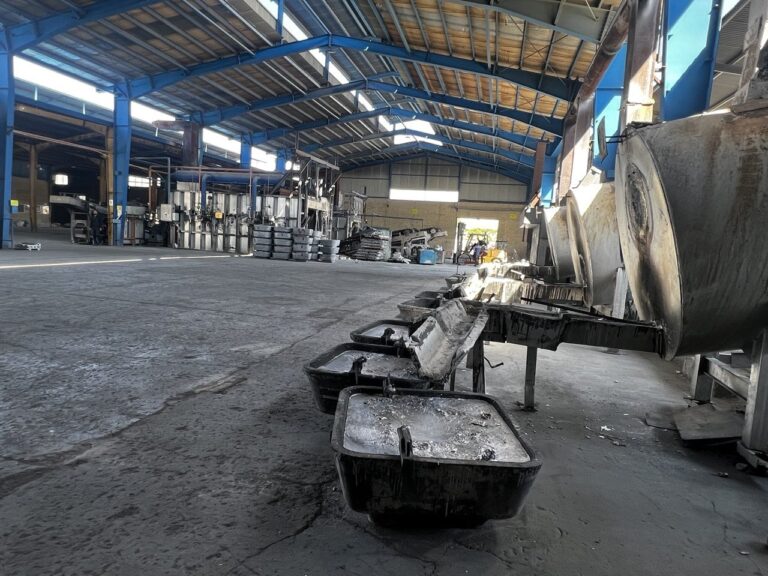
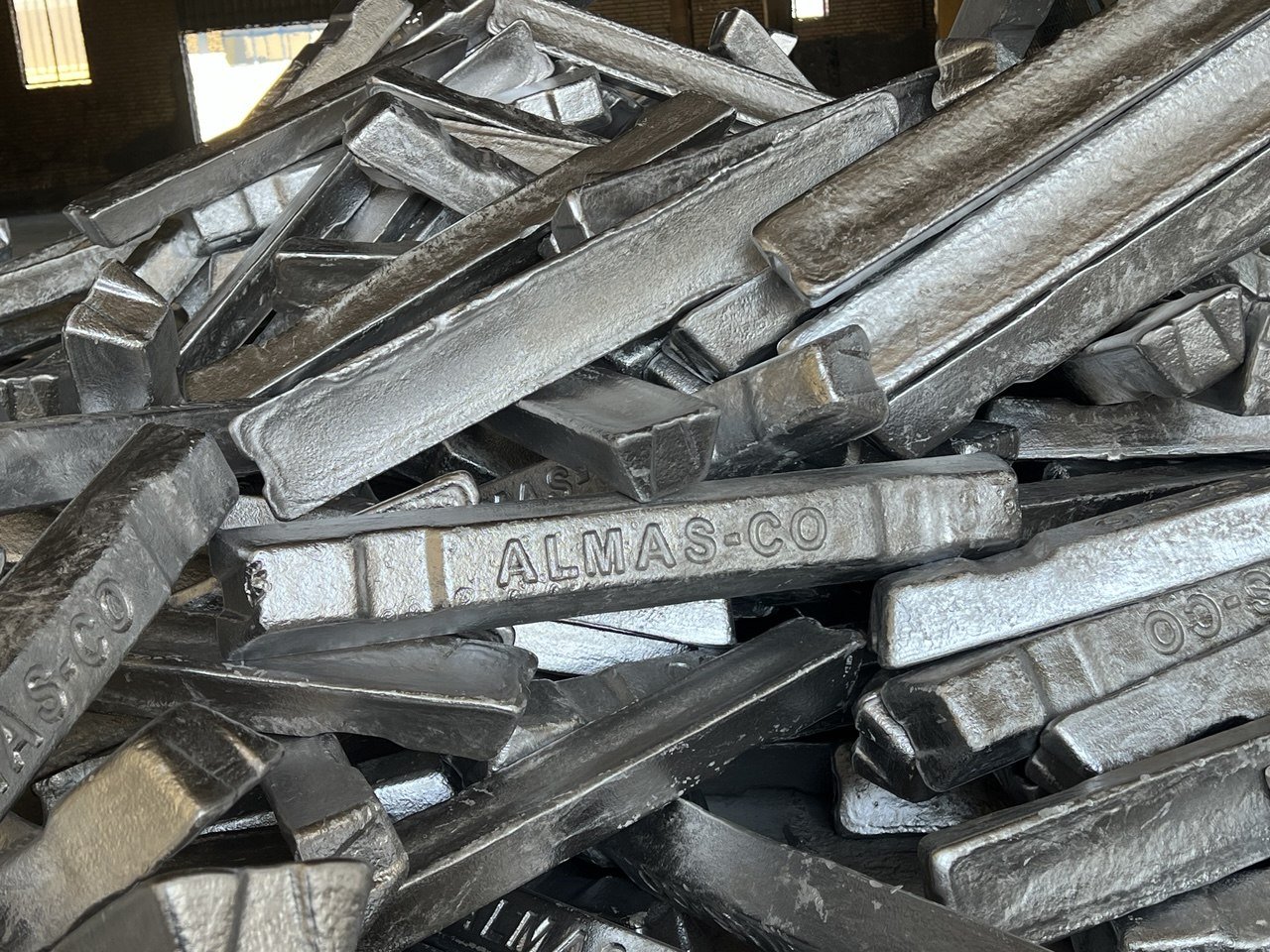
Almas Aluminium produces alloy ingot with the composition checked on every melt, so that foundries work with a predictable starting point. For advice on grades for loaded parts, contact our sales team.
Frequently asked questions
How does A380 differ from ADC12?
Both are Al-Si-Cu die-casting alloys. A380 (US standard) has about 8% silicon and 3–4% copper; the Japanese ADC12 has more silicon (about 10–12%). Both are similarly sensitive to iron and sludge.
Why is iron not removed completely in die casting?
Some iron (typically about 0.8–1%) stops the melt from soldering to the steel die. The goal is not to remove iron but to control it and its ratio to manganese and chromium.
Source
L. Ceschini, A. Morri, S. Toschi, A. Bjurenstedt, S. Seifeddine, "Influence of Sludge Particles on the Fatigue Behavior of Al-Si-Cu Secondary Aluminium Casting Alloys", Metals, 8(4), 268 (2018). DOI: 10.3390/met8040268 (open access). Read the original paper
This article is the Almas Aluminium editorial team's summary of a published research paper. For the full experiments, tables and figures, please refer to the original paper.