

After switching its supplier of secondary AlSi12Cu1 alloy, a maker of washing-machine parts saw unusually fast wear of its machining tools. Researchers at the University of Žilina in Slovakia compared the microstructure of the old and new castings and found the cause: hard "sludge" particles formed from iron, manganese and chromium in the recycled alloy.
AlSi12Cu1 and secondary alloys
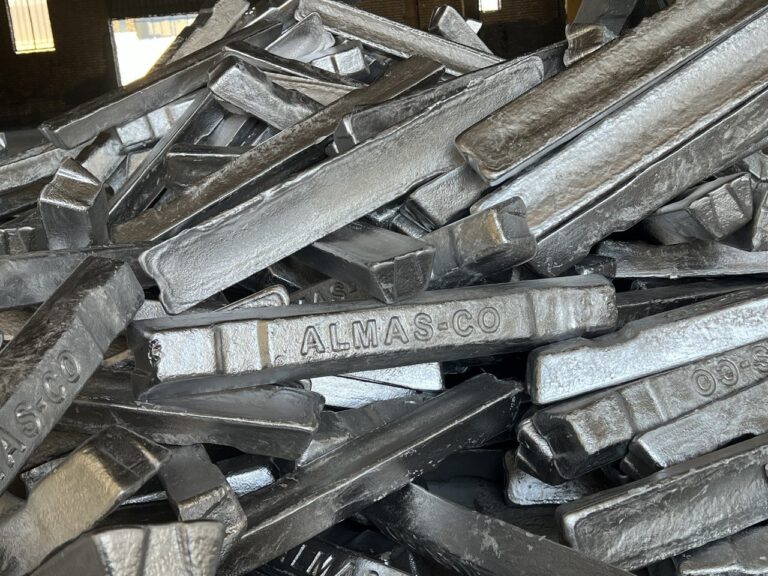
AlSi12Cu1 (EN AC-47000) is a eutectic alloy with about 12% silicon, used for thin-walled castings that resist hot cracking. It is often produced as a secondary alloy, i.e. from recycled scrap. Recycling saves a great deal of energy and raw material, but with every cycle elements such as iron, manganese and chromium build up in the alloy and cause problems if they are not controlled. We explain the difference between primary and secondary ingot in this article.
What was compared
Two sets of castings were compared: those from the previous supplier (CPA) and those from the new supplier (CPB). At first sight the compositions were similar, but a few small differences had a big effect:
- Iron: 0.62% in CPA versus 0.945% in CPB (the standard limit is 0.7%, so CPB was above it).
- Chromium: 0.023% versus 0.095% (close to the 0.1% limit).
- Iron-to-manganese ratio: about 2.8 in CPA and about 3.3 in CPB.
Findings
- The CPB castings contained many coarse, polyhedral (star-shaped) iron-rich particles, i.e. sludge. These particles are very hard and brittle and directly cause rapid tool wear.
- The higher Fe/Mn ratio in CPB also produced many needle-like β-Al5FeSi particles, which reduce ductility and mechanical properties.
- In CPA, with a lower Fe/Mn ratio, the iron-rich phase was mostly "Chinese script", which is far less harmful.
- The calculated sludge factor (SF) was higher for CPB, and the required balance between iron and manganese had not been respected.
The sludge factor in plain terms
The sludge factor combines the effect of iron, manganese and chromium in one number, most commonly SF = %Fe + 2×%Mn + 3×%Cr. The higher the SF, the higher the temperature at which sludge forms, so it is most likely in low-temperature holding furnaces such as those used in die casting. The large weight of chromium shows that even a few hundredths of a percent more can change the picture.
Lessons for ingot buyers
The study shows that a grade name alone does not guarantee quality. CPB's iron was only a few tenths of a percent higher and its chromium was still under the limit, yet that was enough. Two ingots sold under the same name can give very different results in machining and tool life. Practical steps:
- Ask for a full certificate of analysis with every shipment and check iron, manganese and chromium separately.
- Calculate the SF and Fe/Mn ratio and compare them with previous shipments; a sudden change is a warning sign.
- When changing supplier, run a trial batch through machining and metallography.
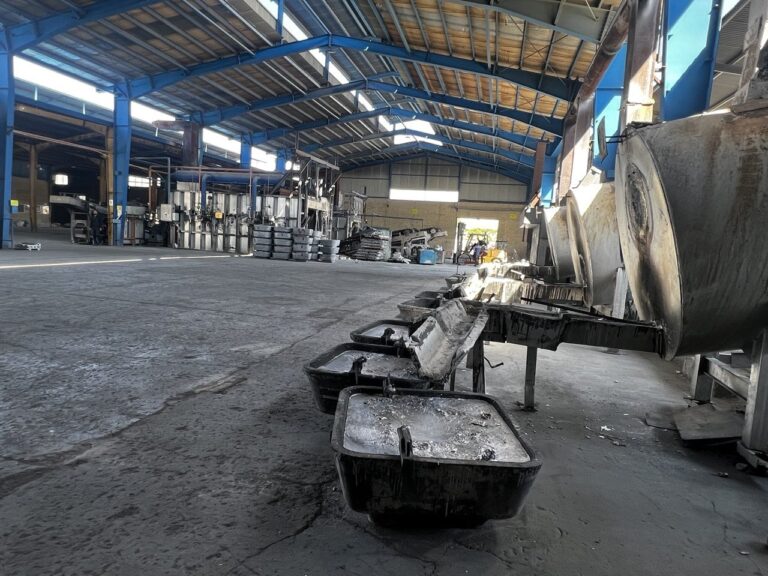
At Almas Aluminium, the chemical composition of every melt is checked before the ingot is cast, so that shipments stay consistent. See our grades.
Frequently asked questions
Why does sludge wear the tool?
Sludge particles are intermetallic compounds of iron, manganese and chromium, far harder than the aluminium matrix. When the cutting edge passes through them they act like abrasive grit and blunt it faster.
Is secondary alloy always of lower quality?
No. A secondary alloy made from well-sorted scrap with tightly controlled composition is perfectly suitable for many castings. Problems arise when iron, manganese and chromium are not controlled.
Source
E. Tillová, M. Chalupová, L. Kuchariková, I. Švecová, J. Belan, "Sludge Phases as Cause of Higher Wear of Cutting Tools during Machining of Secondary AlSi12Cu1 Castings", Manufacturing Technology, Vol. 19, No. 5 (2019), University of Žilina.
This article is the Almas Aluminium editorial team's summary of a published research paper. For the full experiments, tables and figures, please refer to the original paper.