


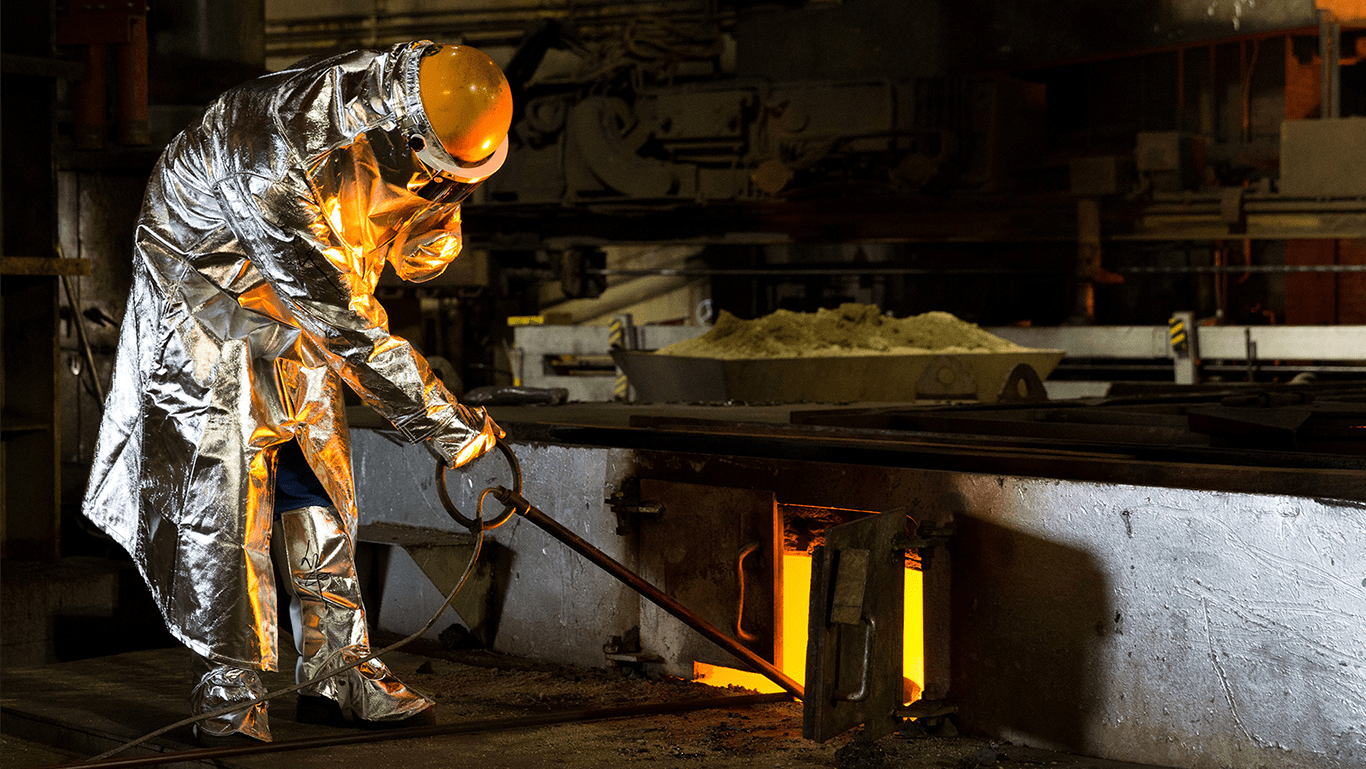
Pure aluminium melts at about 660 °C — far lower than steel (about 1,400–1,500 °C) or copper (about 1,085 °C). This low melting point makes melting and casting aluminium relatively inexpensive and recycling it economical.
Alloys do not have a single melting point
Unlike the pure metal, aluminium alloys melt and solidify over a temperature range: between the “solidus” (where melting starts) and the “liquidus” (where it is complete). Alloying elements usually bring this range below 660 °C.
Aluminium–silicon alloys
In the aluminium–silicon system, the eutectic point lies at about 12.6% silicon and about 577 °C. Alloys close to this composition, such as LM6 and A413, solidify at an almost constant temperature and have excellent fluidity. Alloys such as A356, with about 7% silicon, have a wider freezing range.
Casting temperature
For casting, molten aluminium is usually held a little above the liquidus so that it flows well; the exact temperature depends on the alloy, the casting process and the section thickness. Excessive temperatures increase hydrogen pick-up and oxidation, so temperature control goes hand in hand with melt degassing.
Compared with other metals
| Metal | Approx. melting point (°C) |
|---|---|
| Aluminium | 660 |
| Zinc | 420 |
| Magnesium | 650 |
| Copper | 1,085 |
| Iron | 1,538 |
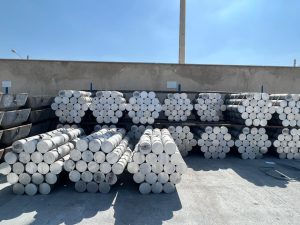
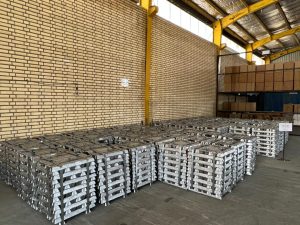
Almas alloy ingots are made for remelting in foundry furnaces. See the grade composition table.