

6061 and 6063 are the most widely used 6xxx-series (aluminium–magnesium–silicon) alloys. Both can be heat-treated and welded, but one is chosen for strength and the other for surface quality and ease of extrusion.
Chemical composition (main ranges)
| Element | 6061 | 6063 |
|---|---|---|
| Magnesium (Mg) | 0.8–1.2% | 0.45–0.9% |
| Silicon (Si) | 0.4–0.8% | 0.2–0.6% |
| Copper (Cu) | 0.15–0.4% | 0.1% max |
| Chromium (Cr) | 0.04–0.35% | 0.1% max |
Key differences
- Strength: with more magnesium and copper, 6061 is stronger, especially in the T6 temper.
- Surface and extrusion: 6063 extrudes more easily and gives a smoother surface for anodizing and painting, which is why it is the main alloy for window and door profiles.
- Uses: 6061 for structural parts, frames, machined components and transport; 6063 for architectural profiles, façades and decorative work.
Common tempers
Both alloys are usually supplied in the T5 or T6 temper, meaning they have been artificially aged after forming. Learn the temper codes.
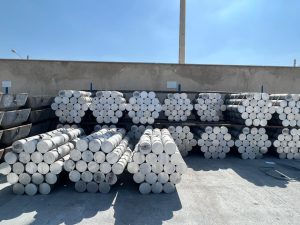
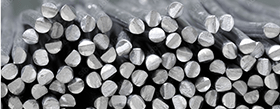
These alloys are made from aluminium billet by extrusion. For casting alloys, see the Almas ingot composition table.