

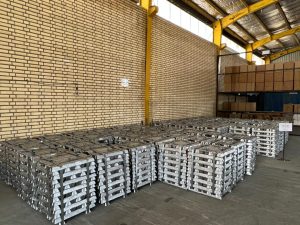
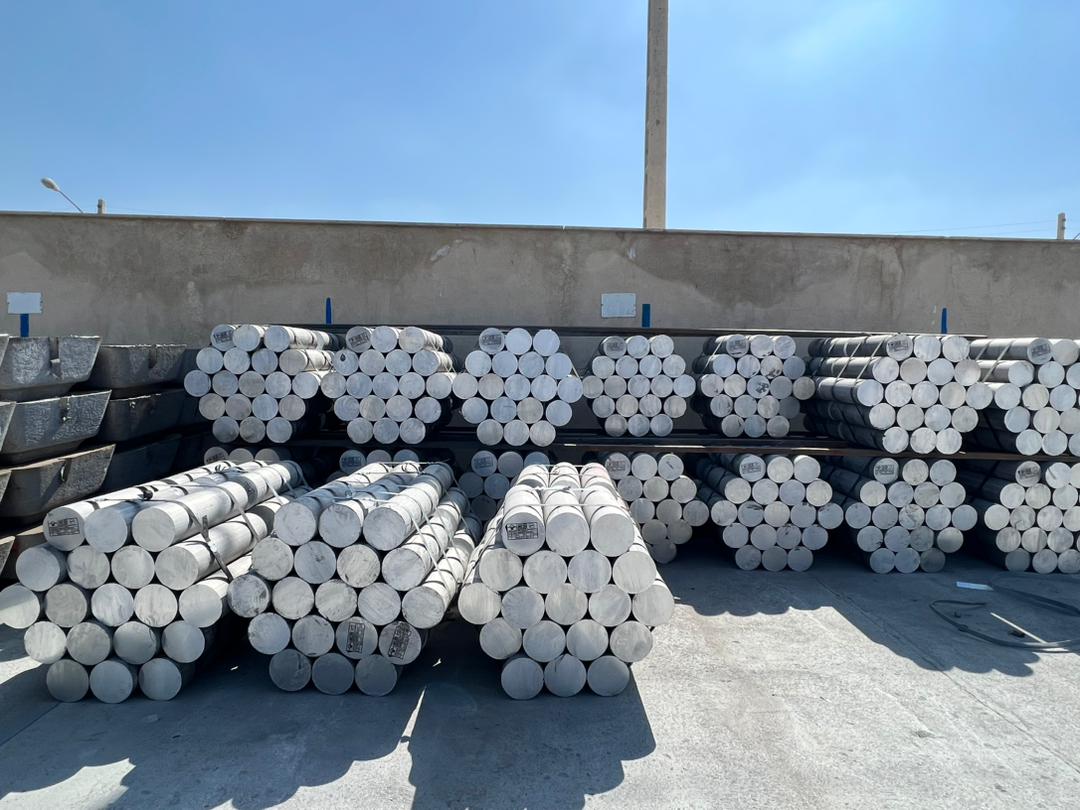
Extrusion is a process in which a hot aluminium billet is forced through a die under high pressure to produce a profile with the desired cross-section — much like toothpaste squeezed from a tube. Window and door profiles, frames, heat sinks and many structural parts are made this way.
The extrusion steps
- Cutting and preheating the billet: the aluminium billet is cut to length and heated to the forming temperature (usually several hundred degrees, below the melting point).
- Pressing: the billet is loaded into the press container and the ram pushes it through the die.
- Quenching: the emerging profile is cooled with air or water.
- Stretching: the profile is stretched to straighten it and relieve stresses.
- Cutting and ageing: the profiles are cut and placed in an ageing oven (T5 or T6 temper).
Common alloys
6xxx-series alloys, especially 6063 and 6061, account for most extrusions. The 1xxx, 3xxx, 5xxx and 7xxx series are also used for special applications.
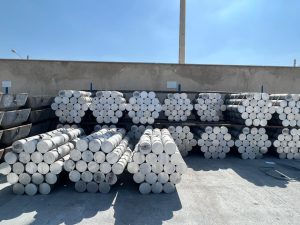
Billet quality is profile quality
Uniform chemistry, a fine-grained structure, low hydrogen and inclusion levels and correct homogenization of the billet directly affect extrusion speed, surface quality and the properties of the profile. After extrusion, many profiles are anodized or powder-coated.